
Workflow automation
Manual handoffs become rules your systems follow.
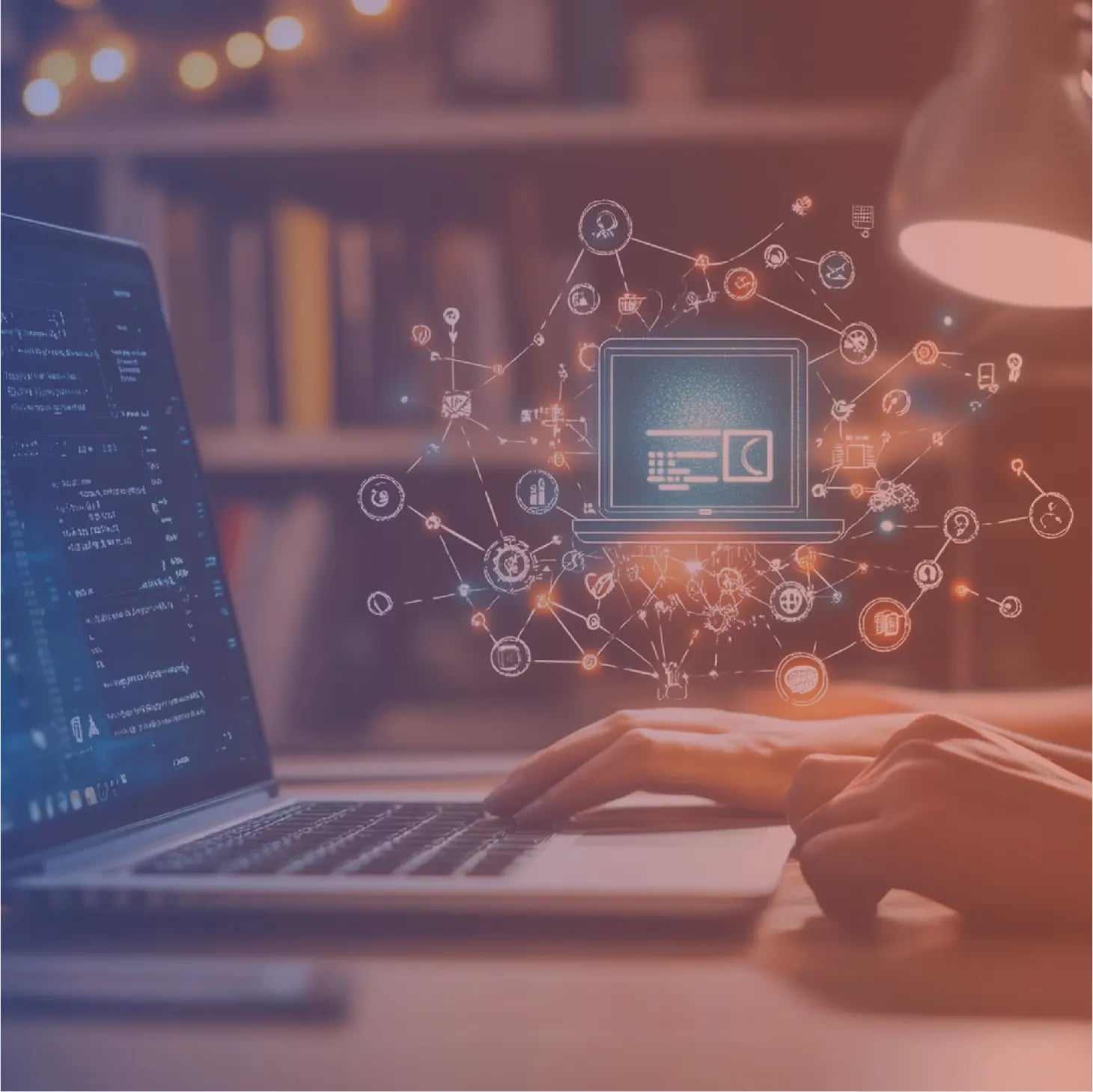
We automate the repeatable, rules-based work between your tools: approvals, data entry, notifications, file movement. No AI required. One accountable delivery lead maps the process and owns the decision record; senior engineers in the UAE and Pakistan with Berlin-led delivery build and test the flows before they touch production.
Workflow automation
What we deliver
Concrete deliverables, clearly scoped. You know before we start what you will have at the end.
Process mapping & automation design
We document how work actually moves through your team, step by step, and mark which steps follow fixed rules. Those become the automation backlog, sorted by hours saved and error risk.
Rules-based automation builds
We build deterministic flows in n8n, Make, or Zapier, with custom scripts where the platforms stop. Every flow has an owner, a retry path, and a log you can audit.
Data entry & handoff elimination
Orders and invoices move between your systems without anyone retyping them. Where a human check is needed, the flow pauses and asks instead of guessing.
Monitoring & documentation
Each automation ships with a runbook, failure alerts, and a plain-language description your ops team can maintain. You are not dependent on us to change a rule.

Why our approach works
Deterministic beats clever
Rules-based automation does the same thing every time and fails loudly when it cannot. That is what you want for invoicing, approvals, and compliance-relevant steps.
Hours saved, measured
We record a baseline before the first build: time per run and weekly error rate. After go-live you see the difference in numbers, not in feelings.
One entry, available everywhere
When systems share data through defined flows, the parallel Excel sheet dies. One source of truth, fewer copy-paste errors.
You can audit every step
Each run is logged with its inputs and the decision that followed. When your tax adviser or auditor asks how a number got somewhere, you can show them.
Process
How we work
Step 1: Process audit
We sit with the people doing the work and map the real process, including the workarounds nobody wrote down. Output: a process map and a ranked list of automation candidates.
Step 2: Pilot flow
We pick the candidate with the clearest payoff and build it in 2–4 weeks (planning assumption, depends on system access). It runs in parallel until you trust it.
Step 3: Rollout & hardening
The pilot goes live for real work. We add alerts, retries, and edge-case handling based on what actually breaks in the first weeks.
Step 4: Handover & extension
Your team gets the runbooks and a handover session. New candidates from the backlog follow the same path, built by us or by your team with our review.
How an engagement runs
- Fixed price per pilot flow, retainer for the backlog
- Each pilot automation gets a fixed quote after the process audit. Ongoing backlog work bills monthly at the blended senior rate of $25–49 per hour.
- First flow live in 2–4 weeks (planning assumption)
- The main variable is access to your systems, not the build itself. Flows touching three or more tools take longer.
- One accountable delivery lead, one to three automation engineers
- Small team on purpose. The lead maps the process with your ops people; senior engineers in the UAE and Pakistan with Berlin-led delivery build, test, and document the flows.
Tooling
Technology stack
- Automation platforms
 n8n
n8n Make
Make ZapierMicrosoft Power Automate
- Custom logic
 Python
 Node.jsTypeScript scripts
- Data & scheduling
- REST APIswebhookscron workers
 PostgreSQL
 - Operations
 Docker
 GitHub ActionsGrafanaSentry
What you walk away with
Running flows in your tools
Automations live in your n8n, Make, or Zapier account, built so your team can read and edit them.
Process map & rule documentation
The documented process and every rule we encoded, in plain language your operations team owns.
Runbooks & alert setup
What to do when a flow fails, who gets alerted, and how to pause or rerun safely.
Handover session with your team
A recorded walkthrough of every flow, so knowledge stays when people change roles.
Is this the right service?
A strong fit if...
- Invoices, orders, or leads get typed into more than one system by hand.
- Approvals stall in inboxes and nobody knows who is currently responsible.
- You want auditable automation: every run logged, every rule inspectable.
Not a fit if...
- The task needs reading of unstructured documents or judgment calls. That is AI territory; our AI automation service covers it, this one deliberately does not.
- You expect automation to fix a broken process. We map first and will recommend changing the process before encoding it.
- Your systems change every quarter. Flows need stable endpoints; heavy churn makes maintenance cost more than the saved hours.
For Tecsofiy we automated email routing and scheduling in n8n, with core flows live within the first week.
Read the case studyBuilt for the German business environment
International companies running software and AI in Germany need more than engineering capacity. They need a partner who works the way German teams, procurement, and data protection officers expect.
German-speaking delivery lead
One accountable lead runs decisions, written updates, and handover in German or English. Your team in Germany is never the last to get context.
DSGVO and GDPR by design
Data-minimising architectures, EU hosting options, processing records, and DPAs (AVV) prepared together with your data protection officer.
German contracts and invoicing
EUR quotes, phased statements of work, German jurisdiction, and documentation that stands up to procurement and internal audit.
Integrates with German systems
We connect DATEV, SAP, Microsoft 365, Personio, Shopware, and your existing ERP or CRM instead of asking you to replace them.
CET/CEST and US overlap
Daily overlap with German business hours, plus enough shared time for US stakeholders so both sides keep moving.
EU AI Act readiness
Human review, audit trails, and model documentation for the AI systems we build, aligned with how German auditors expect AI to be governed.
Get in touch
Stop retyping data
Send us one process that eats your team's time. We will tell you honestly whether it is automatable and what it would cost.
Berlin leads, three hubs deliver
German-led delivery across Berlin, the UAE, and Pakistan — we diagnose your problem first, then build a tailored solution.
EU & US timezone overlap
Daily overlap with teams in Germany and the US — synchronous when it matters.
From MVP to scale-up
One partner across AI, web, mobile, and UX — through every stage of your product.
Email us
admin@solutionplus.io
Response time
Within one business day
Clear & direct
You're not the first to ask, and we're ready.
Which processes are a good fit for rules-based automation?
Any process where the decision logic fits on one page: if this, then that. Typical candidates are invoice intake, approval chains, report generation, and data sync between tools. If a step needs judgment or reading unstructured text, we say so and keep a human in that step.
n8n, Make, or Zapier: which one do you recommend?
It depends on your data protection requirements and budget. Self-hosted n8n keeps data on your infrastructure and is our default for German clients with strict GDPR needs. Make and Zapier are faster to start with and fine for less sensitive data.
What happens when an automation fails?
The flow stops and alerts the named owner with a full log of what happened. Nothing fails silently. For critical paths we add automatic retries and a manual fallback procedure, so a broken API key never means lost invoices.
What does a first automation project cost?
We work at a blended senior rate of $25–49 per hour. A single pilot flow typically lands in the low four figures (planning assumption, scoped after the process audit). You get a fixed estimate before any build starts.