
From concept clarification to production-ready B2B SaaS
Refined the product concept to reduce scope by 28% and delivered a multi-tenant B2B SaaS platform in 6 months.
- Concept to production
- 6 months
- Scope cut via validation
- 28%
- Critical bugs on launch
- 0
- Discovery
- Interviews + workflow mapping before stack selection
- Build window
- Six months to production-ready multi-tenant SaaS
- Team
- 3–5 engineers, scaled by phase (design → build → hardening)
- Architectural bet
- PostgreSQL row-level security for tenant isolation at the data layer
Overview
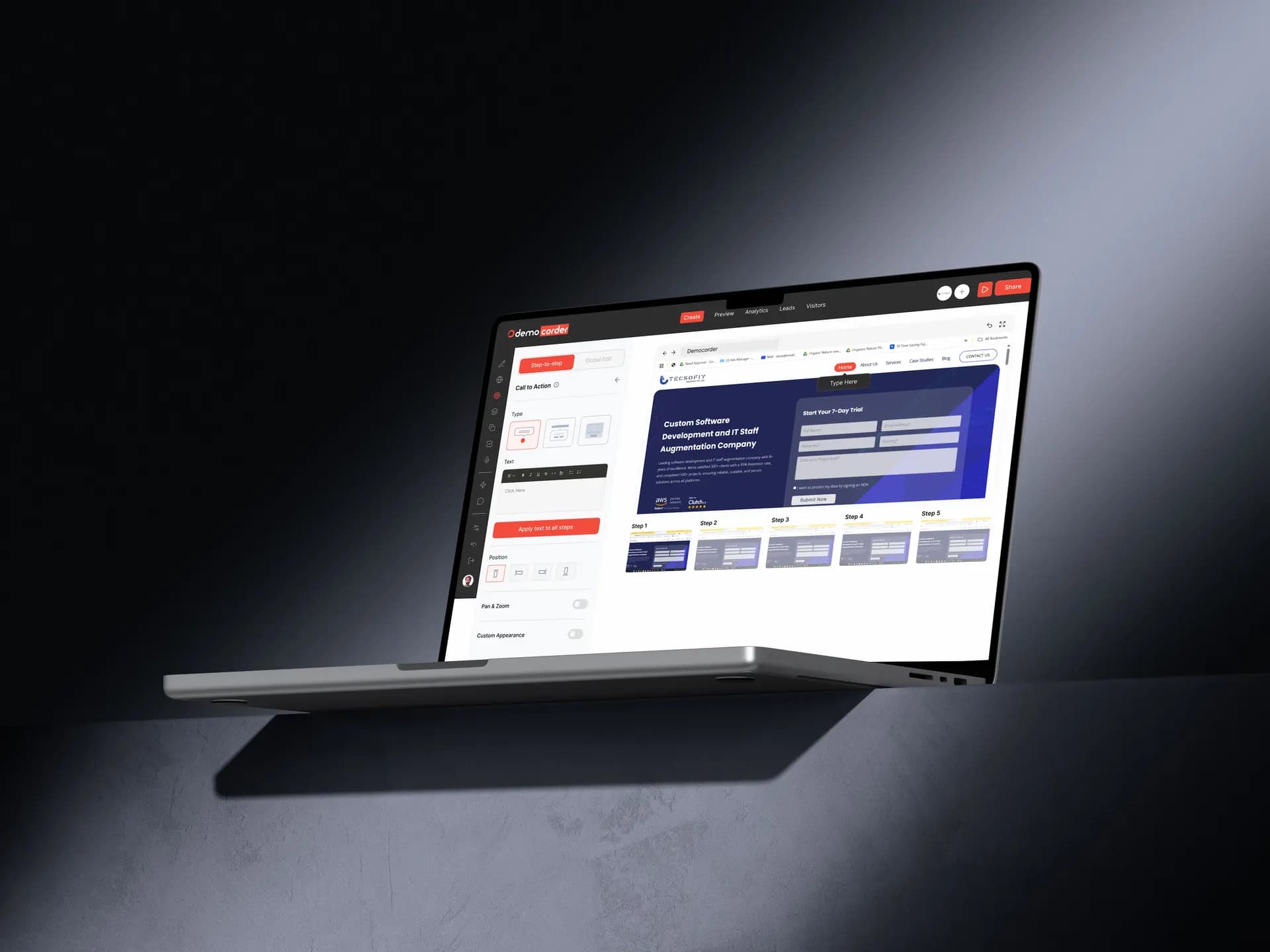
Democorder targets US and international B2B teams (multi-currency from day one) and approached us with a clear product ambition and no internal technical team. The founder had received proposals from several agencies ranging from $80K to $250K, each recommending a different stack and a different approach. The problem was not a shortage of options. It was the absence of a framework for evaluating them.
What we did first
Before selecting any tooling, we tested the assumptions behind the product. User interviews and workflow mapping produced two findings that changed the direction of the build.
Nearly 30% of the original feature scope did not address real user friction
Multi-user governance and collaboration needs were significantly understated in the initial brief
Three risks identified before writing a line of code: Over-architecting for scale that would not exist in year one, choosing a database model unsuitable for multi-tenant permissions, and underestimating integration complexity.
“Clarity came before code.”
B2B-first system design
Because Democorder required organization-level usage from the start, the database was structured around organizations, role-based permissions, shared resources, and tenant isolation at the database layer. Retrofitting permissions logic into a live multi-tenant system is expensive and disruptive. Building it correctly at the schema level meant the platform could support multiple teams without structural changes later.
Architecture designed for real constraints
The stack was chosen for maintainability and fit, not trend or familiarity.
What the business gained
Democorder left with a smaller, sharper scope and a foundation that could onboard organizations without a permissions rewrite later.
- Concept to production-ready
- 6 months
- Engineering team
- 3–5 developers, scaled by phase
- Scope reduced through validation
- 28%
- Engineering time saved via architecture decisions
- ~4–6 weeks
- Critical production bugs in first 30 days
- 0
- Test coverage on critical user paths
- 92%
Validated scope before capital burn
Cutting ~28% of planned features redirected effort toward multi-user governance that real customers needed on day one.
Tenant isolation by design
Schema decisions matched how B2B accounts actually share (and do not share) data—avoiding brittle bolt-on security.
Operational calm at launch
Focused testing on critical paths kept production incidents low while velocity stayed high in the final milestones.
Why this engagement worked
The decisions that shaped this product were made before the first sprint, not during it.
Thinking partner, not just a vendor
We challenged assumptions, validated decisions, and refined the product continuously — from strategy to QA.
Founder-aware execution
Resources scaled up or down based on phase needs. No fixed team overhead during planning phases.
End-to-end ownership
From strategy to QA, there was no handoff friction or context loss. The same technical lead was present throughout.
Validation before code
Spending two weeks validating the problem changed what got built. Designing for real constraints changed how it held up.
What made this different
Typical:Jumped straight to wireframes without problem validation
Ours:Spent 2 weeks validating the problem was worth solving
Typical:Proposed their favorite stack regardless of project needs
Ours:Recommended cheaper solutions where appropriate (saved ~$40K using Supabase)
Typical:Required 6-month fixed contracts with upfront payment
Ours:Flexed team size up/down based on phase needs
Typical:Context loss at each handoff between strategy, design, and dev
Ours:Maintained continuity with same technical lead across all phases
See it live
Visit the website and product we helped build — still running in production today.
Get in touch
Build something like this?
Send us your problem. We reply with scope, timeline, and fixed-scope discipline.

Fixed scope, weekly demos
Your product factory for custom software. We diagnose your bottleneck first, then ship in fixed, weekly-demoed steps.
Shared working hours
Shared hours with Germany and the US East Coast, synchronous when it matters.
From MVP to scale-up
One partner across AI, web, mobile, and UX — through every stage of your product.
Email us
admin@solutionplus.io
Response time
Within one business day